What drew you into music early on? What was your original inspiration to go this route with your career?
I guess it’s the typical and well-known story. I like some rock bands, I want to be like them, so I start playing guitar. Then I cannot afford the equipment that I would want to have – which in my case was a flying V and Marshall. I am talking around 1986-87, when everything was very expensive and there wasn’t much choice either…
So that’s how I started into electronics. I was about 13 years old from a family of engineers, so I always had technical stuff around. It started as a hobby in my grandma’s basement, first doing my electronics, then pedals, amplifiers and also non-audio stuff back in the day. Then it came time to go to university and I knew I wanted to be an engineer. The choices were construction, mechanical or electronics, so I decided to go for electronics. Later on in the late 90s, I was starting my PhD and decided I wanted to design professional audio for my career. My passion was guitar, but I didn’t only want to design amplifiers. I sent some CVs here and there and I got a job in Behringer quite quickly, where I started my career in this industry. I then moved from Behringer to Marshall, and eventually from Marshall into my own business.
You spent years with Marshall as both a technical director and an amp designer, creating some of their most iconic amplifier lines, and working with some of the most renowned guitarists in the world. Are there any particular moments or achievements that stand out to you from that time?
There are obviously quite a few…First, working for Marshall was my dream job, so getting in there and being part of that company was a big milestone for me. Working for my guitar heroes is something that I didn’t even dream of, but, more than working for them, what stands out to me is being able to know them and even become friends over the years.
Going to any shop – even in 2026 – and seeing the amplifiers that I designed back in 2007-2008 (JVM, MG and others) also has a special meaning. Seeing what took months or years of my life to create last for so many years and even become an industry standard. What more could one ask for?
What made you decide to take the leap into developing an effects pedal brand?
Doing “my own thing” was something I always wanted to do. I would probably have to go back to my years working with Uli Behringer, when he told me many times that I had to do it someday if that’s what I really wanted, same as him when he was younger. Even though it isn’t as easy as one may initially think (and the more years you are in the industry, the more complicated and discouraging the whole idea looks!). But around 2 years ago there was some momentum with Tommi and Torsten coming in to give a hand, and we had some new ideas and products that had been developed over the years. Torsten joining and opening all the doors of sales and marketing is what finally made us go for it. We knew how to design products but we were missing ‘everything else.’
So, tell us a little bit about citadel. For a music retailer new to the brand, what are the benefits of stocking the line?
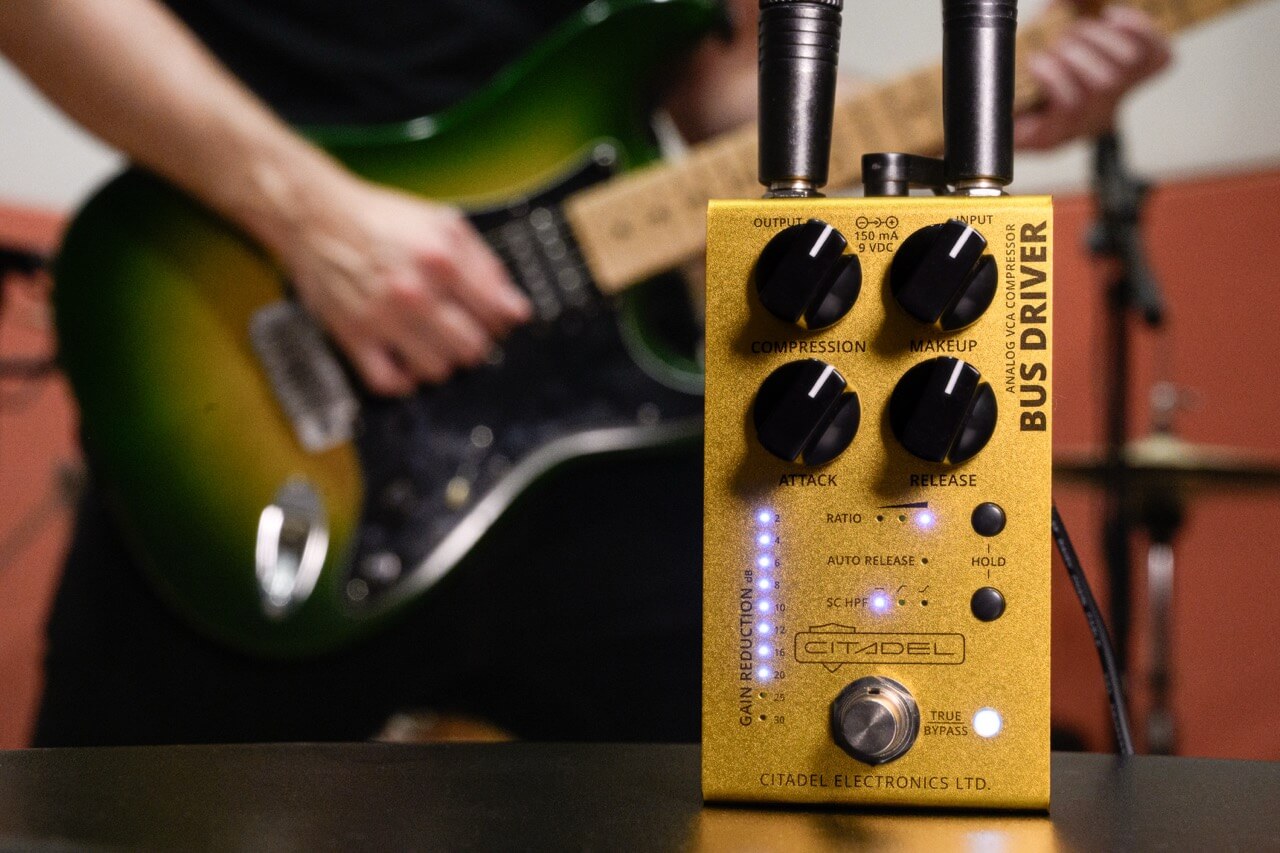
I guess this is the million-dollar question (pun intended), but it’s a difficult question to answer. Obviously, we are all professionals in the business and we believe that we know how to design electronics. We know we are presenting a good product. We understand that some pedals like the distortions are a matter of taste, but they are designed properly. Other pedals like the compressor or the gate are designed to excel in their category from a more objective point of view, which we believe we’ve accomplished.
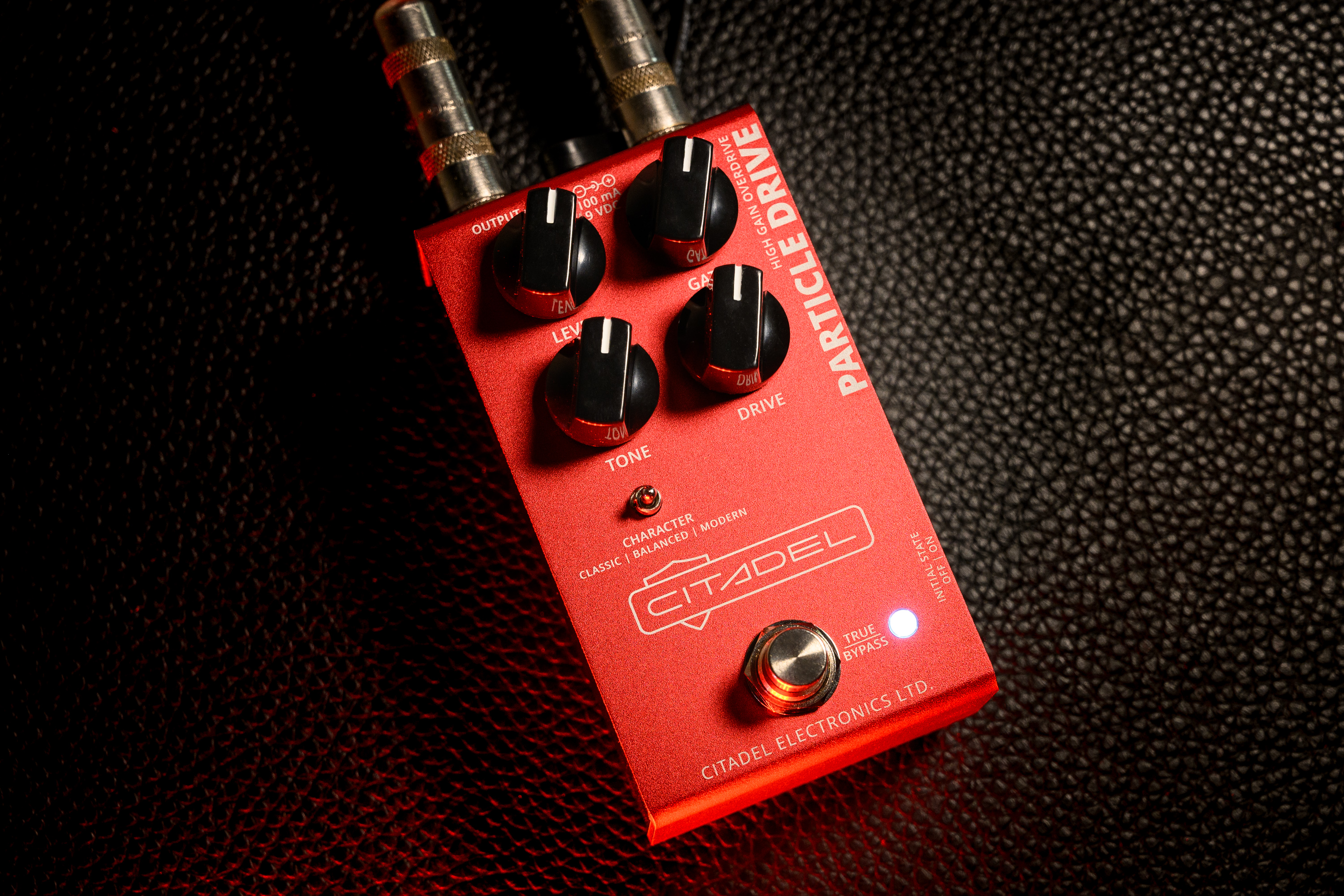
In any case, the pedals aren’t just a clone-of-x, but the result of what we consider to be good effects with practical features, such as the momentary function for the phaser, the effect status recall on power on, etc.
We also offer something that probably isn’t as visible to the final customer: we are running a proper company; we aren’t just guys in the basement soldering pedals by hand and putting them in the post. We are definitely small and still working to take off, but the structure is there, we are aware of what needs to be done, providing safety and EMC approvals, dealing with contract manufacturers, and so on. And, if you ask me, these are the best guitar effect pedals ever designed! The brand kicked off with seven SKUs.
Are there plans to keep expanding? Anything interesting on the horizon you can talk about?
Yes, definitely. We didn’t want to launch the brand with just one or two pedals, especially in 2025, where the pedal industry is so crowded. So, we went for a more comprehensive range to try to make some impact. We also focused on pedals that everyone could use, not some odd special effects that are hyper-specific musically and limit the intended target audience.
We are expanding the range within the same premises. We’ll have more boosters and distortions and are also working on a couple modulation and digital effects. We want to complete what we could call the standard lineup, or the foundation, before moving into something different.
We hope that by the end of 2026 we can present at least 4 new models, plus an artist signature pedal. In the long term, we want to expand into accessories like power supplies – and we haven’t forgotten about amplifiers. We have the advantage that I am known for my works in the amplification business, so adding amplifiers to the product line seems like a natural evolution. Time will tell!